Water Spots on Cars in Pearl City: Causes, Prevention, and Removal Guide
White rings on paint or cloudy marks on glass usually come from one thing: water that dried before it was wiped away.
That sounds simple, but on Oahu it can turn into a real headache. Sprinklers hit parked cars. Trade winds dry rinse water fast. Heat bakes minerals onto the surface. What starts as a few light marks can become stubborn spots that don’t wash off.
This guide explains how water spots form, what makes them worse, how to prevent them, and what to expect from professional water-spot treatment at Like New Car Detailing in Pearl City.
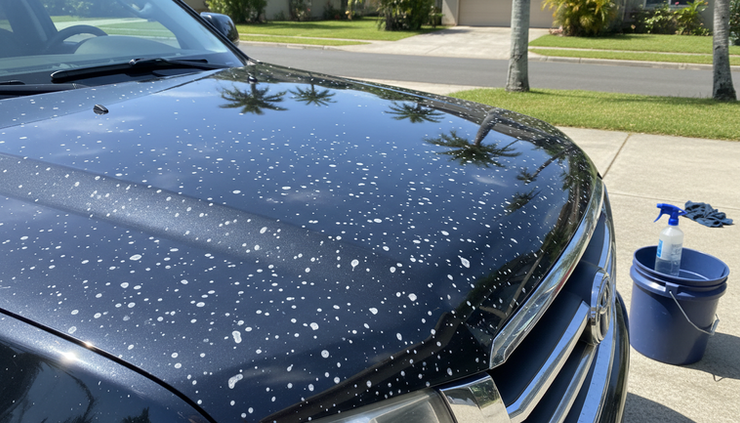
What causes water spots on cars in Hawaii
Water spots form when water lands on paint or exterior glass, then evaporates. The water disappears, but minerals and other solids can stay behind.
The U.S. Geological Survey describes hard water as water that contains dissolved minerals, mostly calcium and magnesium. Those minerals are common in many water sources. When mineral-containing water dries on a vehicle, it can leave pale rings, cloudy patches, or rough-feeling deposits.
That’s why water spots on cars in Hawaii often show up after:
Irrigation water from sprinklers
A quick rinse without proper drying
Washing a car in direct sun
Parking near overspray from landscaping
Salt air mixing with moisture on the surface
Rainwater picking up dust or minerals before drying
Fresh spots are often just mineral deposits sitting on top of the surface. Those are usually easier to treat.
Older spots can be different. If minerals sit too long, heat and sunlight can help them bond more tightly to the paint or glass. In some cases, the minerals can leave a mark after the surface deposit is removed. That deeper mark is often called etching.
Think of it this way. A fresh deposit is like dried salt on a countertop. It sits on top. Etching is more like a faint stain or dull mark in the surface itself. It takes more work, and it doesn’t always come out completely.
Fresh water spots are not the same as etched spots
Not all water spots need the same fix. The right approach depends on how long they’ve been there, what surface they’re on, and how deeply they’ve affected that surface.
Fresh mineral deposits
Fresh spots usually look like light rings or dots. They may feel slightly rough if you run clean fingers over freshly washed paint. On glass, they can look like cloudy circles or streaks, especially when sunlight hits the windshield or side windows.
These spots are often caused by water drying quickly. In Pearl City, Aiea, Waipahu, Mililani, Honolulu, and other parts of Oahu, that can happen fast on a warm day.
Fresh water spots may respond to careful cleaning and proper water-spot treatment. The goal is to remove the minerals without grinding into the surface.
Older spots with possible etching
Older spots can look dull, chalky, or shadow-like. They may still show after washing. They may also remain after the raised mineral deposit has been removed.
That’s where surface condition matters.
Vehicle paint has a clear top layer. This clear coat gives gloss and protection. If minerals have etched into that layer, the mark is no longer just sitting on top. Removing or reducing it may require polishing. Polishing removes a very thin amount of the damaged clear layer to improve the look.
Glass can also be affected. Water spots on car windows may start as surface deposits, but long-term mineral buildup can become harder to remove. Exterior glass is tough, but it can still be scratched by the wrong pads, powders, or tools.
The main point: fresh spots are usually more workable. Older spots need closer inspection.

Common sources of water spots around Oahu
Water spots don’t always come from washing the car. Many start while the vehicle is parked.
Sprinklers and irrigation overspray
Sprinklers are a big one. Irrigation water may carry minerals. When it lands on hot paint or glass, the water dries and leaves deposits behind.
The pattern is usually easy to spot. One side of the vehicle gets hit more than the other. You may see spots on the doors, fenders, mirrors, and windows facing a lawn or sidewalk.
If the car sits there often, the spots can build up layer by layer.
Washing in direct sun
Washing a vehicle under strong sun gives soap and rinse water less time to move off the surface. Water can dry before it’s fully rinsed or wiped away.
That leaves mineral deposits on car paint, especially on flat panels like the hood, roof, and trunk. Dark paint shows it faster, but light colors can have the same problem.
Improper drying after a rinse
A quick rinse feels useful, but it can make spotting worse if the car air-dries. Tap water often contains minerals. If it sits and evaporates, it can leave marks.
The same goes for letting water sit in mirrors, trim, door handles, and around badges. As the car moves, trapped water can drip down and dry into streaks.
Parking near construction dust or tree debris
Water spots can mix with dirt, dust, pollen, or tree sap residue. That can make the marks more stubborn. Rain falls, picks up debris on the vehicle, then dries into a dirty mineral film.
This is common for cars parked outside all week.
Why aggressive DIY methods can cause damage
It’s tempting to scrub hard when spots won’t wash off. That’s where many problems start.
A rough pad, harsh powder, or strong household cleaner can do more harm than the water spots. Vehicle paint is not the same as tile, kitchen glass, or a shower door. The clear coat can scratch, haze, or lose gloss if it’s attacked with the wrong method.
Glass can also be damaged. Exterior automotive glass is durable, but abrasive materials can leave fine scratches. Those scratches may become more visible at night when headlights hit the windshield.
Avoid these common mistakes:
Scrubbing with kitchen pads or stiff brushes
Using household bathroom cleaners on paint
Rubbing dry spots without washing first
Using abrasive powders without knowing the surface condition
Pressing hard on glass near trim or edges
Repeating the same harsh method when it doesn’t work the first time
A safer process starts with cleaning the surface, identifying the type of spot, then choosing the least aggressive method that can do the job.
That matters because paint can only be polished so many times over the life of a vehicle. Every aggressive step removes some material or adds risk. The goal isn’t to attack the spot. It’s to protect the surface while improving the finish.

How to prevent car water spots safely
The best fix is prevention. You can’t control every sprinkler or rain shower, but small habits help a lot.
Dry the vehicle after washing
Don’t let rinse water air-dry. Dry the paint and glass with a clean, soft microfiber towel made for vehicle surfaces.
Work from top to bottom. Pay extra attention to:
Roof edges
Side mirrors
Window trim
Door handles
Fuel door area
Rear hatch or trunk seams
Those areas hold water and drip later.
Wash in shade when possible
Shade slows drying. That gives you more time to rinse and towel-dry before minerals settle.
If shade isn’t available, wash smaller sections at a time. Rinse and dry each section before moving on.
Move away from sprinkler overspray
If a sprinkler hits the same parking spot every morning, move the car when possible. Even a few feet can help.
Look for the spray pattern. If one side of the vehicle always gets spotted, that’s a clue.
Keep paint protected
A clean, protected surface gives minerals less grip. Wax, sealant, or other paint protection can make washing and drying easier. Protection doesn’t make a car water-spot proof, but it can reduce how strongly deposits bond to the surface.
Still, protection needs maintenance. If water sits and bakes in the sun, spotting can still happen.
Rinse soon after sprinkler exposure
If sprinkler water hits the car, rinse it with clean water as soon as practical, then dry it. Don’t just add more water and walk away. That only restarts the same drying cycle.
These steps help prevent car water spots, but they won’t remove older etched marks.
What professional water-spot treatment can and can’t do
Professional treatment starts with inspection. That’s the only honest way to judge what’s possible.
At Like New Car Detailing, water-spot treatment for vehicle body surfaces and exterior glass is performed at the Pearl City shop. It is not offered as mobile full detailing. The shop setting allows the surface to be seen, cleaned, and treated with the right process.
People searching for car water spot removal Oahu or water spot removal Pearl City usually want a simple yes-or-no answer. Can the spots be removed?
The real answer depends on three things.
The age of the spots
Fresh spots are usually more responsive. Older hard water spots on a car may have bonded deeper or caused etching.
If the vehicle has been parked near sprinklers for months, the treatment may improve the look, but full removal may not be possible.
The severity of the buildup
Light spotting is different from heavy mineral crust. Heavy buildup may require multiple careful steps. The process still needs to protect the paint and glass.
More pressure is not always better. More abrasive work can raise the risk of haze, scratches, or clear coat thinning.
The surface condition
A newer, well-maintained surface may respond better than paint that is already thin, oxidized, scratched, or heavily weathered.
Glass condition matters too. If glass already has scratches, chips, or deep staining, water-spot treatment may improve clarity but cannot make damaged glass new again.
No responsible detailer should guarantee complete removal before seeing the vehicle. The best next step is an inspection, then a realistic quote based on the actual condition.
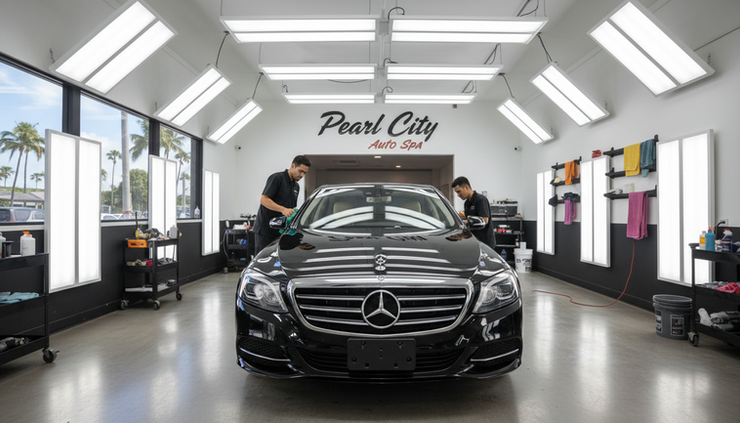
When to get water spots inspected
Some light spots can be handled early with careful washing and drying. Others should be looked at before more damage happens.
Get an inspection if:
Spots remain after a proper wash
The glass looks cloudy in sun or at night
The paint feels rough after washing
Sprinkler marks keep coming back
Spots look dull instead of raised
DIY cleaning made the area hazy or scratched
An inspection can help separate surface mineral deposits from possible etching. It can also prevent wasted time and risky scrubbing.
For vehicle body surfaces and exterior glass, Like New Car Detailing can inspect the spots at the Pearl City shop and explain what level of improvement is realistic. Results depend on the surface. Some spots can be removed. Some can be reduced. Some etched marks may remain.
FAQ
Can water spots be removed from car paint?
Fresh mineral deposits can often be removed or improved with proper treatment. Older spots may have etched the clear coat. If etching has occurred, polishing may reduce the marks, but complete removal is not guaranteed.
Are water spots on car windows permanent?
Some water spots on exterior glass are surface deposits. Those may respond well to treatment. If the minerals have sat for a long time or the glass is scratched, the result can be limited.
Will washing my car remove hard water spots?
A normal wash removes dirt, loose minerals, and fresh residue. It usually won’t remove bonded hard water spots. If spots remain after washing, don’t keep scrubbing harder.
Is water-spot treatment available as a mobile service?
Water-spot treatment for vehicle body surfaces and exterior glass is performed at the Like New Car Detailing shop in Pearl City. It is not offered as mobile full detailing.
How can I stop sprinkler spots from coming back?
Park away from overspray when possible. If sprinkler water hits the car, rinse and dry it soon after. Keep the paint protected and avoid letting rinse water air-dry.
Get a realistic inspection before trying harsher methods
Water spots are easier to deal with when they’re fresh. Once minerals bake onto paint or glass, the job gets more delicate. Scrubbing harder can turn a water-spot problem into a scratch or haze problem.
If spots won’t wash off, get them inspected before using aggressive DIY methods. Like New Car Detailing can look at the paint or exterior glass at the Pearl City shop, explain what’s likely removable, and provide a quote based on the vehicle’s actual condition.


Comments